






Public Education:
Visit our General Info page for breed information and answers to frequently asked questions. If you can’t find the answer to your question, contact our Public Education Committee Member Shelley Erdman.
Judges' Education:
The MPCA is dedicated to providing accurate educational material to judges, aspiring judges and exhibitors. Visit our Judges’ Education page to view our education information.
New MPCA Products:
The MPCA is proud to offer for sale a new line of Min Pin products with the official MPCA Banner. We offer t-shirts, mugs, aprons, bags and much, much more. Visit this link to view and purchase our exciting new line of products.
The MPCA Objectives
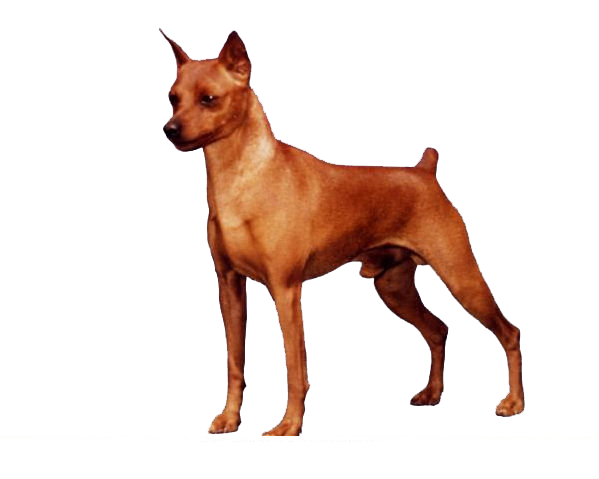
The Miniature Pinscher Club of America, Inc. has been an AKC Member Club since 1930. It is dedicated to the Miniature Pinscher and it’s objectives are as follows:
- To encourage and promote quality in the responsible breeding of pure-bred miniature pinschers and to do all possible to bring their natural qualities to perfection.
- To urge members and/or breeders to accept the standard of the breed as approved by the American Kennel Club, Inc. as the only standard of excellence by which the miniature pinscher shall be judged.
- To do all in its power to protect and advance the interests of the breed by encouraging sportsmanlike competition at dog shows.
- To provide educational seminars and conduct sanctioned matches, obedience trials, and specialty shows under the rules of the American Kennel Club, Inc.
Pinscher Patter
The Latest Min Pin News Is Here!
The Pinscher Patter is published four times per year for the members of the Miniature Pinscher Club of America, Inc. and other persons interested in the Miniature Pinscher Breed. Published by the MPCA, the subscription cost to members’ is included with their annual dues and to non-members for $45.00 per year ($65.00 outside the United States).
Pinscher Patter. Fall, 2018 ISSUE
OFFICIAL MPCA PUBLICATION
MPCA NATIONAL SPECIALTY WINNERS
“BEST OF BREED – GCH MARLEX N KISA SET FIRE
TOP TWENTY – GCH MARLEX N KISA SET FIRE”
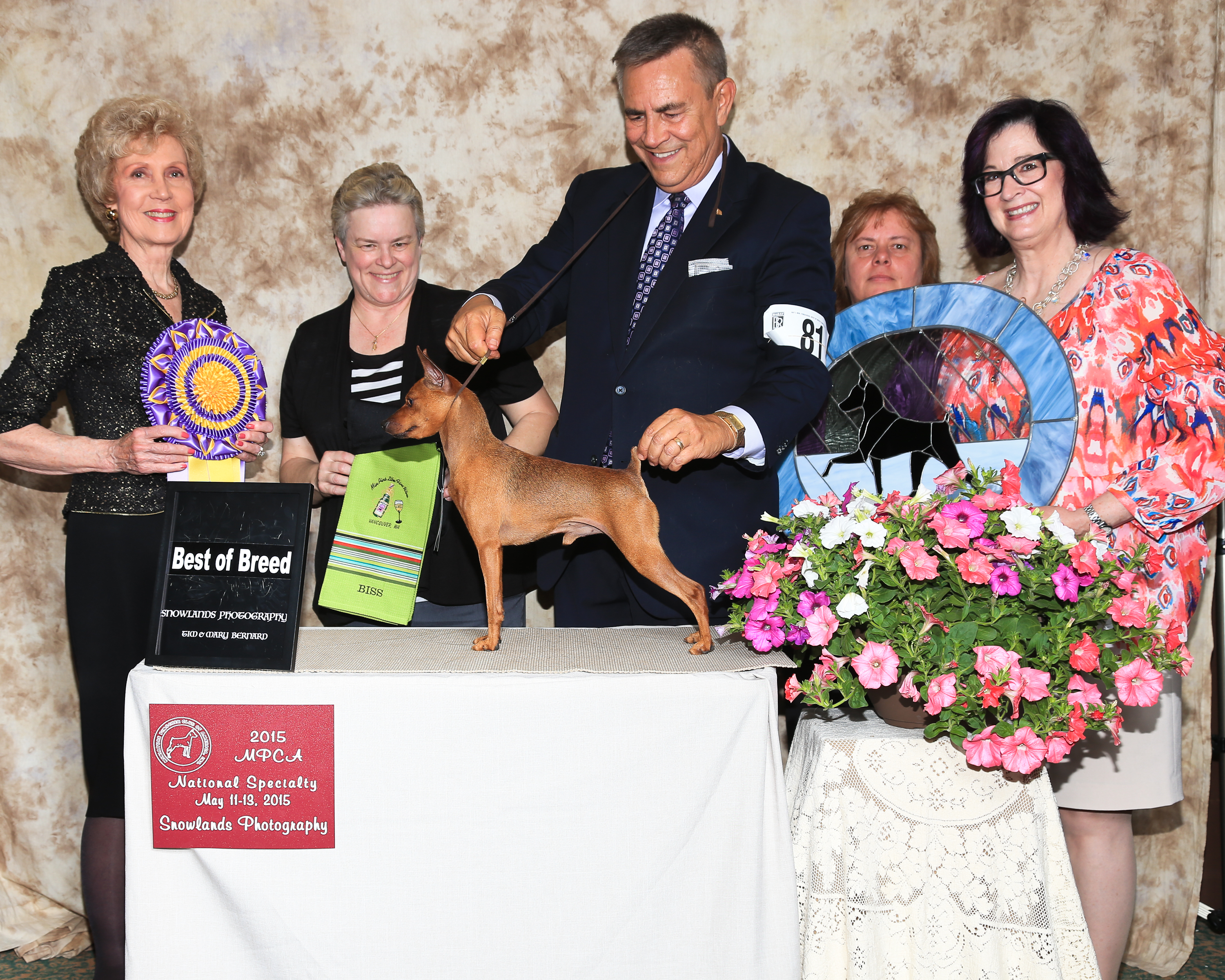
“BEST OF BREED – GCH MARLEX CLASSIC RED GLARETOP TWENTY – GCH MARLEX CLASSIC RED GLARE”

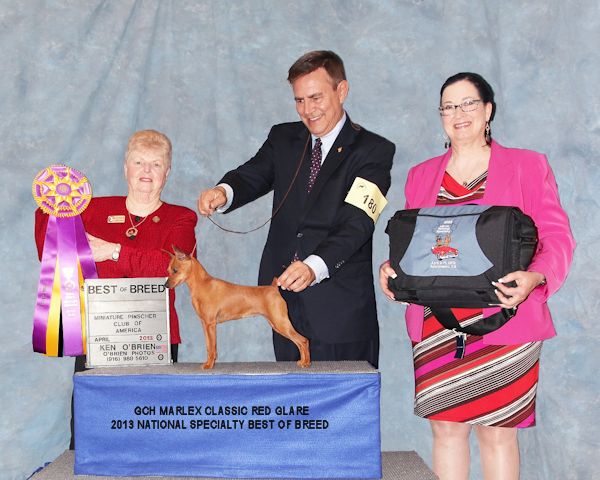
“BEST OF BREED – GCH MARLEX CLASSIC RED GLARE
HIGH IN TRIAL – CH SULTANS STOLEN LOVE CD RN
TOP TWENTY – GCH MARLEX CLASSIC RED GLARE”
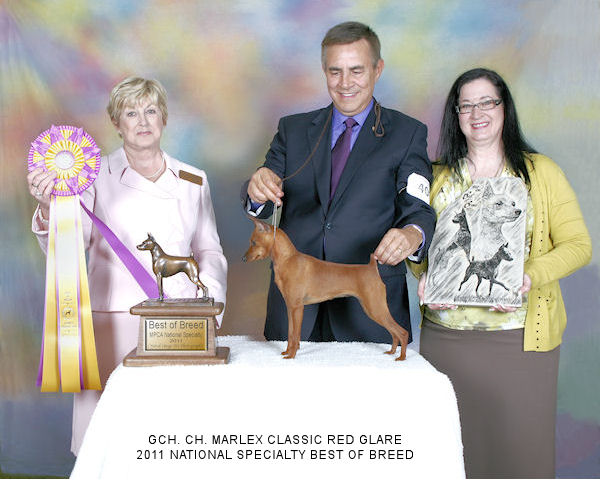
“BEST OF BREED – GCH. CH. MARLEX CLASSIC RED GLARE
HIGH IN TRIAL – TIMLINE SHANSU BRO TO BATTLE, UDX8, OM3, RA
TOP TWENTY – GCH. CH. MARLEX CLASSIC RED GLARE”





Explore Our Site
The MPCA is dedicated to protecting and advancing the interests of the Miniature Pinscher. It encourages and promotes the responsible breeding of pure-bred Miniature Pinschers.
Have Any Questions?
If you have questions regarding the MPCA or the Miniature Pinscher breed, contact us.
MPCA CLASSIFIED ADS
The classified ads are provided for your convenience to help you find kennels, stud services or a Miniature Pinscher from MPCA members that have paid for their listing.
MPCA ANNUAL AWARDS
MPCA ANNUAL AWARDS
Annual Awards are presented each year at the Awards Banquet held at the National Specialty.